Introduction to Film Photography: A Beginner’s Guide
Film photography has been around for more than 135 years, yet it continues to attract photographers who appreciate its distinctive look and deliberate process. Unlike digital photography, shooting film requires patience, planning, and a deeper understanding of exposure. Each frame matters, which encourages photographers to slow down and be more intentional with their compositions.
For many photographers, film also brings a sense of craftsmanship back into the creative process. You choose the film stock, consider the lighting carefully, and wait to see the results after development. That anticipation is part of what makes film photography so rewarding.
If you're new to shooting film, understanding a few foundational concepts will help you avoid common mistakes and produce better images from your first rolls. This guide introduces the fundamentals of film photography, including camera types, film formats, ISO selection, and practical tips for getting started.
Choosing the Right Film Camera
When selecting a film camera, it's important to consider both its size and intended purpose. Some photographers prefer compact cameras for travel and casual shooting, while others choose larger systems that offer more manual control and interchangeable lenses.
Comfort is also an important factor. A camera that feels natural in your hands will make shooting more enjoyable and encourage you to use it more often. You should also consider how easily the camera can be stored and transported, particularly if you plan to carry it on trips or long walks.
35mm Cameras: SLR and Point‑and‑Shoot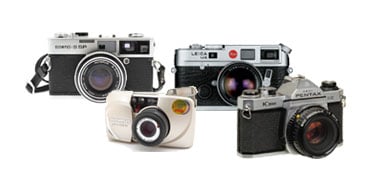
The most common film format is 35mm, which offers an excellent balance of image quality, affordability, and portability. Because 35mm film is widely available and easy to process at most labs, it is often the best place for beginners to start.
These cameras typically come in two forms. Single‑lens reflex (SLR) cameras offer interchangeable lenses and manual exposure control. Point‑and‑shoot cameras are smaller and designed for simplicity, often with automatic exposure and focus.
Popular 35mm camera brands include Canon, Nikon, Pentax, Olympus, and Leica.
Medium Format Cameras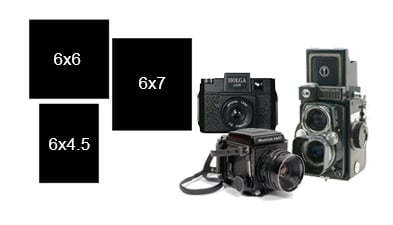
Medium format cameras use 120 film, which produces negatives significantly larger than those from 35mm cameras. The larger image area results in greater detail, smoother tonal transitions, and larger potential print sizes.
Film for these cameras is available in several frame sizes including 6×4.5, 6×6, and 6×7. Each format produces a slightly different aspect ratio and number of exposures per roll.
Well‑known medium format manufacturers include Hasselblad, Mamiya, Rollei, and Yashica.
Obsolete Film Formats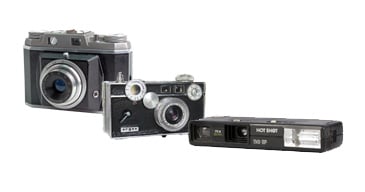
Some older cameras rely on film formats that are no longer widely produced, including 110, 126, 127, and Advantix film. While expired film can sometimes still be found through specialty retailers, results may vary depending on how the film was stored.
Understanding Film Types
Film photography offers several different film types, each with its own visual characteristics and development process. Most films fall into three primary categories.
Color Negative Film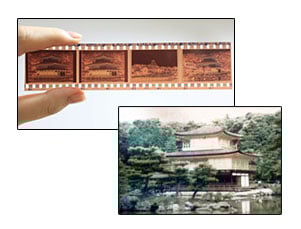
Color negative film produces the familiar color photographs most people associate with traditional photography. After development, the film appears as a negative image with a distinctive orange base.
Most color films today are processed using C‑41 chemistry, which is supported by nearly all commercial film labs. Major manufacturers include Kodak, Fujifilm, Lomography, and CineStill.
Black and White Film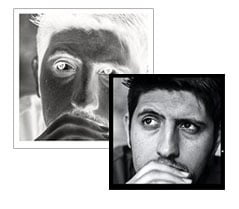
Black and white film produces negatives containing tones ranging from deep black to bright white, along with a wide range of gray values in between. Many photographers enjoy black and white film because it emphasizes light, contrast, and composition rather than color.
Transparency (Slide) Film
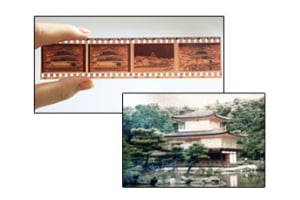
Transparency film, or slide film, produces a positive image rather than a negative, meaning the final image appears directly on the film when viewed with light.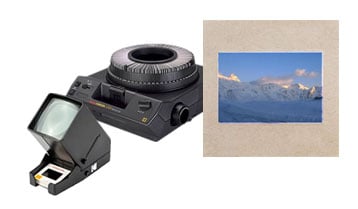
It is known for rich color, high contrast, and excellent sharpness, often making colors appear more vibrant than color negative film. Because of this, it has been widely used for landscape and commercial work where color accuracy matters.
Slide film has very limited exposure latitude, so precise metering is critical. Highlights can easily blow out and shadows can lose detail if exposure is off.
It is typically developed using the E-6 process and, in 35mm format, is often mounted in slide frames for viewing or projection.
Understanding ISO (Film Speed)
ISO refers to the sensitivity of film to light. The ISO rating printed on the film roll determines how sensitive the film is and how the camera should be set before shooting.
Lower ISO films require brighter lighting conditions but produce finer grain. Higher ISO films perform better in low light but introduce more visible grain.
Common ISO Film Speeds
ISO 100 is ideal for bright sunlight or studio photography with flash and produces very fine grain.
ISO 200 works well outdoors on slightly overcast days or indoors with adequate lighting.
ISO 400 is often considered the most versatile film speed.
ISO 800 is useful for lower‑light environments where flash may not be practical.
ISO 1600 and ISO 3200 are designed for night photography and very dim lighting situations.
Understanding Film Grain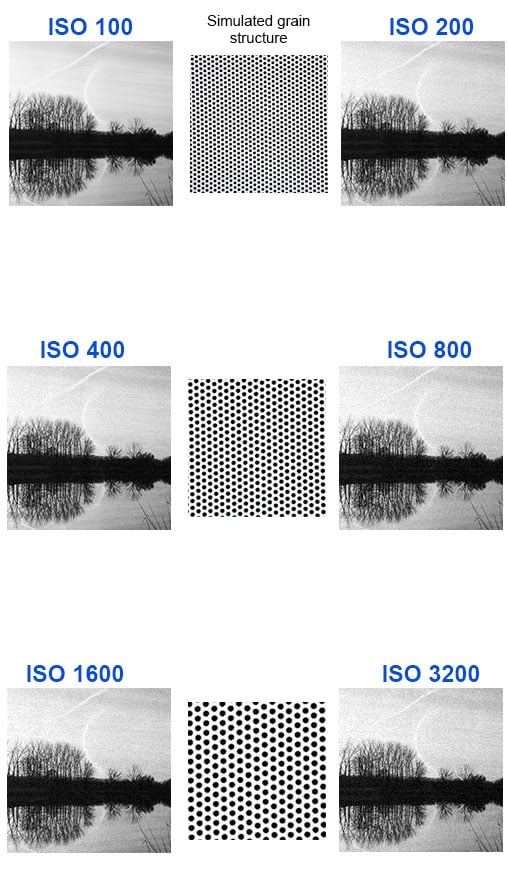
Film grain occurs when silver halide crystals within the film emulsion react to light during exposure. Lower‑ISO films contain smaller crystals and produce finer grain, while higher‑ISO films increase sensitivity but also produce more visible grain.
Essential Rules for Shooting Film
Always check the expiration date on your film before loading it into your camera, as expired film can produce unpredictable results.
Load film in minimal light and make sure it is properly secured in the take-up reel. Improper loading can result in blank rolls.
Set the camera’s ISO to match the film speed before shooting to ensure accurate exposure.
Keep an eye on the shot counter so you know how many exposures remain on the roll.
Carry spare batteries, as many film cameras rely on them for metering and operation.
Film is sensitive to light and heat. Store it in a cool, dry place and develop exposed rolls as soon as possible.
Keep the camera back closed until the film is fully rewound into the canister, and make sure you know where the release button is before rewinding.
Use flash when subjects are in front of bright windows or under heavy shade to avoid underexposure. If using a disposable camera, it’s often best to keep the flash on even in bright conditions.

Be aware that the first and last frames on a roll may be partially exposed during loading and rewinding.
Store developed negatives in archival sleeves to prevent scratches, mold, and damage.
Different film types—color, black and white, and transparency—will produce different results, so experimentation is part of the process.
Film photography behaves differently than digital and requires patience, practice, and a willingness to experiment.
Final Thoughts
Film photography behaves differently from digital photography and often requires patience and experimentation to master. With practice, photographers develop a deeper understanding of light, exposure, and composition.